How Dirty Air Ducts Can Reduce Heating and Cooling Efficiency
Your HVAC system depends on airflow.
When your furnace, air conditioner, or heat pump runs, it needs to move air through the filter, blower, ductwork, vents, and rooms of your home. If that airflow is restricted, your system may have to work harder to heat or cool the house.
Dirty air ducts are not the only cause of poor efficiency. Filters, coils, blower components, duct leakage, and equipment problems can all affect performance. But when there is heavy dust, debris, pet hair, or buildup inside the system, it can contribute to reduced airflow and lower comfort.
1. Dust and Debris Can Restrict Airflow
A little dust inside a duct system is normal. But heavy buildup can make it harder for air to move freely.
This is especially true if debris collects near vents, inside return ducts, around the filter area, or in sections of ductwork where airflow is already weak.
When airflow is restricted, your HVAC system may need to run longer to reach the temperature set on the thermostat. Longer run times can mean more energy use and more wear on the system.
2. Dirty Filters Make the System Work Harder
Your HVAC filter is one of the most important parts of the system.
If the filter is dirty, clogged, loose, damaged, or the wrong size, airflow can suffer. A clogged filter makes it harder for air to pass through the system. A loose or poorly fitted filter can allow dust and debris to bypass the filter and enter the HVAC equipment and ducts.
A better filter may help, but higher filtration is not always automatically better. Some filters are too restrictive for certain systems. The right filter needs to balance filtration and airflow.
3. Dirty Ducts Can Be a Sign of a Bigger HVAC Problem
Dirty ducts are sometimes the symptom, not the main problem.
If your ducts are collecting a lot of dust, pet hair, or debris, the system may have poor filtration, return air leakage, disconnected ducts, a dirty blower, or gaps around the filter rack.
Return-side leakage is especially important. If the return ducts are leaking in an attic, crawlspace, garage, or wall cavity, the system may pull dusty air into the HVAC system. That dirty air can then move through the equipment and into the ductwork.
Cleaning the ducts may help, but the system should also be inspected to find out why the ducts became dirty.
4. Buildup Can Affect Comfort From Room to Room
Poor airflow can make some rooms feel less comfortable than others.
One room may feel warm while another feels cold. Some vents may feel weak. Some rooms may feel stale or dusty even when the system is running.
This does not always mean the ducts need cleaning. It may be caused by duct design, closed vents, disconnected ducts, dirty blower components, or equipment problems. But if debris is restricting airflow or collecting inside the duct system, professional cleaning may help.
5. Dirty HVAC Components Can Reduce Efficiency Too
The ductwork is only one part of the system.
Dust and debris can also collect around the blower compartment, evaporator coil, filter rack, and return air area. If these parts are dirty, the system may not move air or transfer heat as efficiently.
This is why a proper inspection matters. If the ducts are dirty but the blower or coil is also dirty, cleaning only the ducts may not solve the full problem.
6. Air Duct Cleaning Can Help Remove Old Buildup
Air duct cleaning may help when there is visible dust, debris, pet hair, construction dust, or buildup inside the duct system.
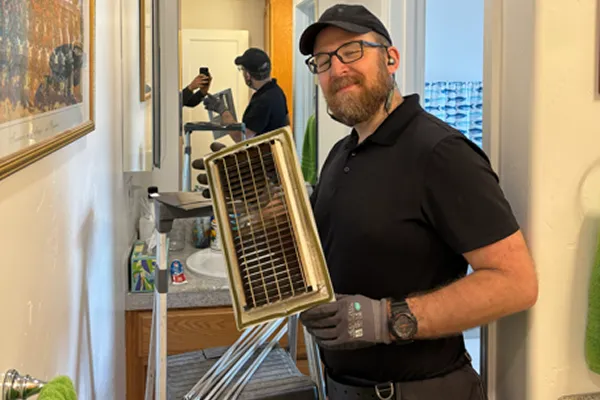
Clean Air Company uses professional duct cleaning equipment to loosen dust and debris inside the ductwork. Negative air equipment helps pull that material out of the duct system and into a sealed, filtered collection unit.
The goal is to remove material from the duct system, not just stir it up.