SERVICE AVAILABLE | CALL US: 9:00 am - 5:00 pm (415) 604-2005 | LICENSE: #1156196
Call Us: 7AM - 10PM | (415) 604-2005 | License #1156196
Indoor Air Quality Starts With Clean Airflow
Comfort is not just about temperature. It’s also about the quality of the air moving through your home.
Indoor Air Quality & System Assessment
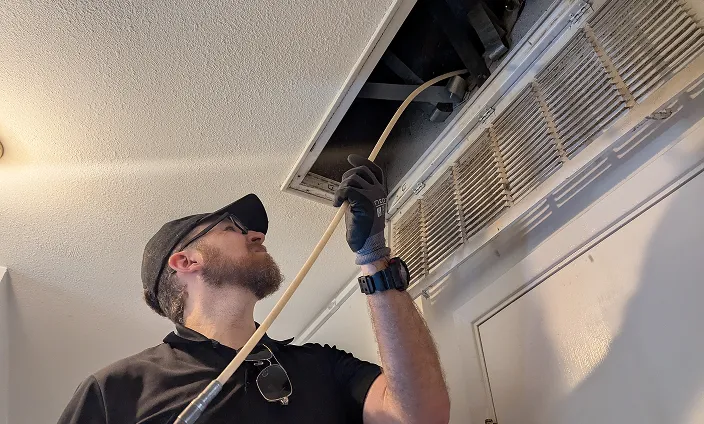
The Ventilation Connection
Every home is different, but the condition of your duct and vent system often plays a bigger role in air health than many realize. We focus on identifying ventilation-related problems and removing buildup so dust and debris aren’t circulating through your home.
Poor indoor air quality can be caused by dirty vents, airflow problems, or clogged filters. Our assessment helps you understand how the condition of your system may be affecting the air in your home.
At Clean Air Company, trust matters.
We believe in transparency. We assess your ventilation system carefully, explain our findings, and recommend the right next steps to ensure your family is breathing cleaner, fresher air without recommending work you don’t need.
Common Questions Asked By Customers
Common signs of poor indoor air quality include excessive dust, lingering odors, allergy or asthma symptoms, uneven humidity, frequent headaches, and stale or stuffy air. If you notice these issues, a professional indoor air quality assessment can help identify potential pollutants and recommend effective solutions.
Indoor air pollution can come from a variety of sources, including dust, pet dander, pollen, mold spores, volatile organic compounds (VOCs), household cleaning products, smoke, and poorly maintained HVAC systems. Inadequate ventilation and high humidity can also contribute to reduced indoor air quality.
A home air quality test typically evaluates factors that affect the air inside your home, such as airborne particles, humidity levels, ventilation, filtration performance, and potential contaminants. Based on the results, a technician can recommend practical solutions to improve your indoor environment.
Improving indoor air quality often involves upgrading air filtration, maintaining your HVAC system, replacing air filters regularly, improving ventilation, controlling indoor humidity, and installing air purification systems when appropriate. The right combination of solutions depends on your home's specific air quality concerns.
Yes. Professional indoor air quality services can help reduce airborne allergens such as dust, pollen, pet dander, and other particles by improving filtration, ventilation, and air purification. While no solution can eliminate every allergen, these services can contribute to a cleaner and healthier indoor environment.
Why Our Duct Cleaning Process Matters
Uses a powerful negative air machine
Helps capture loosened dust and debris
Designed to clean the system properly
Backed by over 20 years of hands-on ventilation experience