Dead Animal Smell Coming From an Air Vent: What Should You Do?
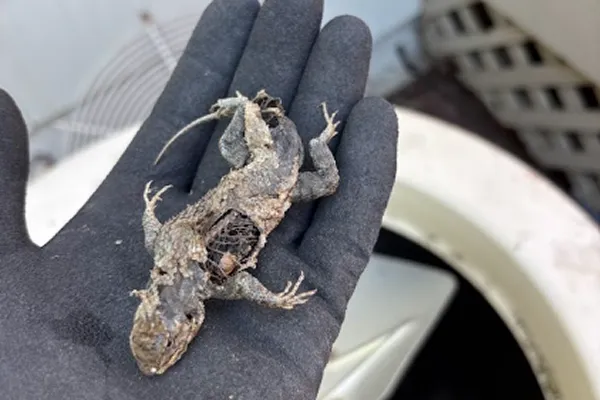
A dead animal smell coming from an air vent is unpleasant, but it also gives you useful information: there is a source somewhere nearby that needs to be found.
The animal may be inside a duct, but it could also be in a wall cavity, attic, crawlspace, furnace platform, return box, or another space connected to the airflow. The odor can travel, so the strongest-smelling vent is not always the exact location.
The right approach is source removal first, cleanup second, and odor treatment only after that.
1. Try to Find the Source
The first step is determining where the smell is actually coming from. A technician may inspect vent openings, return ducts, accessible duct sections, the furnace or air handler area, attic spaces, and other likely locations.
If the carcass can be reached, it should be removed. If it is inside a sealed wall or inaccessible building cavity rather than the duct system, a different trade may be needed to gain access.
2. Check for an Active Rodent Problem
A dead rodent may be a one-time event, or it may be evidence that rodents are getting into the home or HVAC system regularly. Look for droppings, nesting material, damaged ductwork, chewed openings, or repeated sounds and odors.
If rodents are still active, pest control and exclusion should come first. Cleaning a duct system without stopping new rodents from entering can leave you with the same problem again.
3. Contaminated Material Needs Careful Cleanup
Rodent droppings and nesting material should not simply be dry-swept or vacuumed, because disturbing dry contamination can send fine particles into the air.
When rodents have entered a ventilation system, professional cleanup is often the better choice. The scope may include removing nesting material, contaminated debris, or damaged duct sections depending on what is found.
4. Duct Cleaning May Be Needed After Removal
If the animal or nesting material was inside the duct system, physical cleaning can remove remaining hair, dust, debris, and contaminated material.
Clean Air Company uses negative air equipment to keep loosened debris moving toward a filtered collection unit while mechanical brushes clean accessible duct surfaces. The point is to remove the material rather than spread it through the house.
5. Sanitizing Can Be a Follow-Up Step
After contaminated material has been removed and the ducts have been cleaned, sanitizing and deodorizing may be appropriate. Clean Air Company can apply PermaSafe CLEAN to treated duct surfaces when the situation calls for it.
This is a follow-up step. It does not replace carcass removal, physical cleaning, or pest control.
6. Sometimes Duct Material May Need Replacement
Not every contaminated duct can or should be cleaned. Flexible duct, duct liner, or insulation that is badly damaged, wet, or heavily contaminated may need to be replaced instead of treated in place.
A professional inspection can help determine whether cleaning is practical or whether part of the duct system should be repaired or replaced.