Air Duct Cleaning vs. Sanitizing: What Is the Difference?
Homeowners sometimes hear the words cleaning, sanitizing, disinfecting, and protecting used as if they all mean the same thing. They do not.
For air ducts, the easiest way to understand the difference is this: cleaning removes material. Sanitizing treats the surface after the material has been removed. A protective treatment is another optional step after that.
Knowing the difference makes it easier to decide what your home actually needs.
1. Air Duct Cleaning Removes Physical Buildup
Professional air duct cleaning is a mechanical cleaning process. The goal is to remove dust, lint, pet hair, construction debris, and other material from inside the duct system.
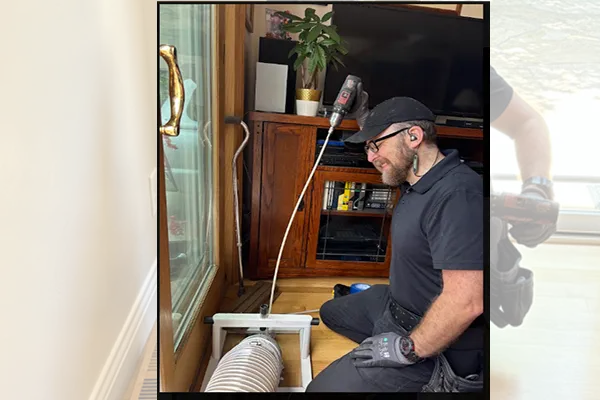
At Clean Air Company, our basic duct cleaning service uses a negative air machine to keep the system under suction while rotating brushes loosen buildup inside each accessible duct. The loosened material is pulled into a filtered collection system instead of being left inside the home.
2. Sanitizing Treats the Cleaned Surfaces
Sanitizing does not replace physical cleaning. It is a treatment step that may be added after dust and debris have been removed.
Clean Air Company uses PermaSafe CLEAN when a sanitizing treatment makes sense. Depending on the condition of the system, the product can be applied to cleaned duct surfaces to address remaining microbial contamination and odor sources that the product is labeled to treat.
3. Why Cleaning Should Come First
A sanitizer needs contact with the surface it is treating. If the duct is still covered with dust, hair, lint, or construction debris, that material can interfere with the treatment reaching the actual duct surface.
That is why our service tiers begin with mechanical cleaning. We do not treat sanitizing as a shortcut around removing the dirt.
4. When Cleaning Alone May Be Enough
Many homes simply have dusty or dirty ducts. If there is no odor problem, no history of contamination, and no reason to treat the surfaces after cleaning, the basic cleaning service may be all that makes sense.
A homeowner should not automatically pay for a higher service tier just because it exists. The condition of the system should guide the recommendation.
5. When Sanitizing May Be Worth Considering
Sanitizing may be worth discussing after rodent contamination, persistent odors, visible microbial growth that has been properly addressed, or other situations where a cleaned surface would benefit from treatment.
The cause still matters. If there is an active moisture leak, standing water, or continuing pest problem, that source should be corrected first. Sanitizing a system without fixing the cause is not a complete solution.
6. Protective Treatment Is a Separate Step
After cleaning and sanitizing, some homeowners may want an additional protective treatment. Clean Air Company can apply PermaSafe SHIELD, which leaves an invisible protective coating on treated surfaces that helps inhibit the growth of microorganisms for up to three months.
SHIELD is an antimicrobial surface protectant. It is not another cleaner or sanitizer, and it does not replace normal HVAC maintenance, filtration, or moisture control.